
■ Japan: Positioned as a “Transit Point”
I cannot forget the look in the eyes of the students I met at a technical university in Ho Chi Minh City.
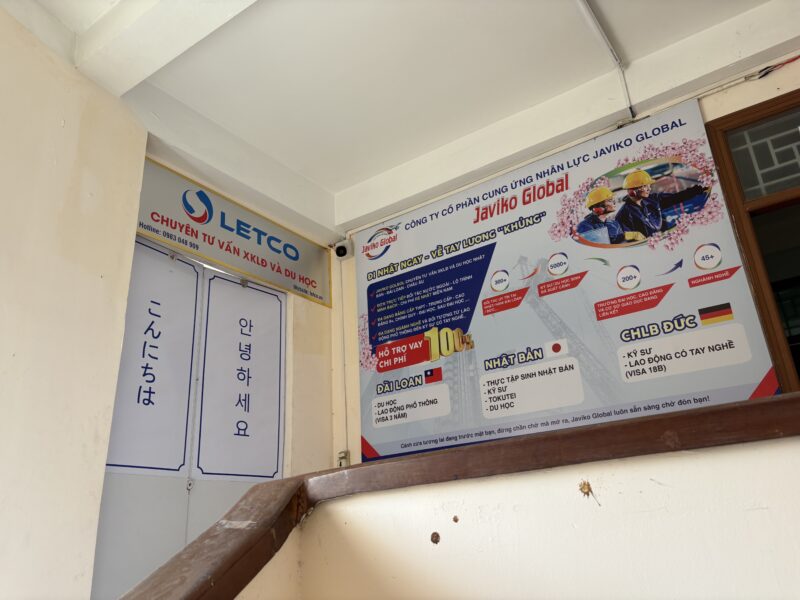
Many of them study Japanese with the hope of building a career in Japan. Looking only at this fact, Japan appears to be a “country that is still being chosen.” However, I realized that their gaze was fixed not on Japan itself, but on “the world beyond.”
When I asked why they wanted to study in Japan, their answer was: “Because Japanese people follow rules and are polite.”
This resonated deeply with a question I received from a student after my speech at the World Economic Forum in India last year: “How can we learn to follow the rules and regulations like the Japanese (Discipline)?”
Students in both India and Vietnam are looking for clues within Japanese “Discipline” to refine their own professional character. They aim to internalize this, using Japan as a foundation to eventually take flight into global possibilities.
Japan is viewed as a “destination,” but simultaneously as a “learning ground” for the world. Confronted with this reality, I felt a profound sense of responsibility.
■ Why True Words Are Born Only Through “Embodiment”
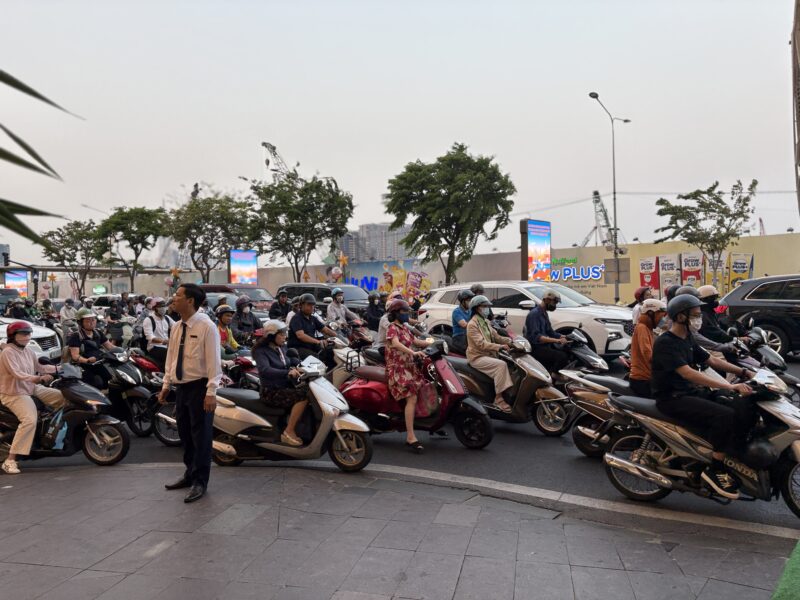
To what extent do we understand things through true “embodiment” (visceral experience)? In Vietnam, I was confronted with how much I had only “assumed” I understood.
Embodiment is what differentiates mere “transmission” from true “resonance.”
In my speeches, whether in Japanese or English, I prioritize an experiential and embodied approach. This is because the essence of communication—whether one-on-one or one-to-many—remains the same: it is a continuous “catch-ball” of energy.
Today, social media and “Reels” allow us to feel as if we are anywhere in the world. While information stored in the mind is valuable, nothing surpasses the experience of seeing the air, hearing the sounds, and feeling the atmosphere of a place with your own skin.
When what the body feels becomes a vivid image and is finally translated into language, we become able to speak with “our own words” for the first time.
I once struggled with a strong fear of public speaking; there was a time when I agonized over words that wouldn’t come out. Because of that struggle, I have come to value the “process” of feeling through the body over the “information” processed by the mind.
Sharing these thoughts daily with my husband, he gifted me this trip to Vietnam for White Day this year.
■ The Vitality Behind the Data
Amidst the heat of Ho Chi Minh, my five senses captured a raw vitality that digital news and data can never convey.
The “eyes” of those students remain burned into my memory. Their passion wasn’t just directed toward Japan; it was a powerful will to “seize their own future,” radiating from their entire being.
For them, Japan is becoming a vital “transit point” to the world. Their earnest determination reached me with a heat greater than any words could express. This “non-verbal realm,” which I have navigated first as an actor and now as a coach, was overflowing from their bodies.
■ Why We Need “Embodiment” Now
We live in an era of information overload. However, what determines whether people of different languages and cultures can truly understand and trust each other is not mere linguistic skill.
It’s the ability to sense the energy behind the other person and deliver one’s own will through the entire body. “Body Speech,” the method I advocate, is designed to refine this “non-verbal intelligence” that breaks through language barriers and awakens one’s vital life force.
During this stay, I received two wonderful gifts: the news of my selection for the “Higashikuni-no-miya Memorial Award” in Japan and the global “LCC Coach Awards 2026 (Most Experienced).”
The “Traditional Japanese Heart” and the “Global Perspective without Borders.” As these two paths intersect, I am convinced that my mission is to translate the unique Japanese sensibility into a power that resonates globally.
■ Shall We Begin a New Dialogue?
When I return to Japan, radio appearances and the preparation of my new book await. However, a “quiet passion” received in the breeze of Ho Chi Minh has now become my new axis.
“Feeling with the body, and speaking with one’s own words.”
Only from this foundation can new leadership and cross-cultural trust be born.
I look forward to delivering the insights from this Vietnamese experience to educational fields and leaders of global organizations. I truly look forward to the opportunity for new dialogue with those who resonate with this vision.
コメント