
“I want to erase my past.”
“Why do I have to suffer so much when others don’t?”
There was a time when I lived my life constantly burdened by these thoughts.
My childhood trauma had laid deep, heavy roots in my heart. Even as an adult, it kept hitting the brakes on my life through chronic self-denial, making me believe, “I have no value.”
Desperate to break free from that cycle, I tried absolutely everything people said would help. But out of all the things I tried, two practices stuck with me for 20 years: the combination of “Dialog Journaling” (inner-dialogue notebook) and “Walking.”
Embracing the “Shadow” and the “Light” to Nurture the Tree Within
We humans naturally tend to seek only the positive (the light) while trying to hide our negative emotions and past traumas (the shadow).
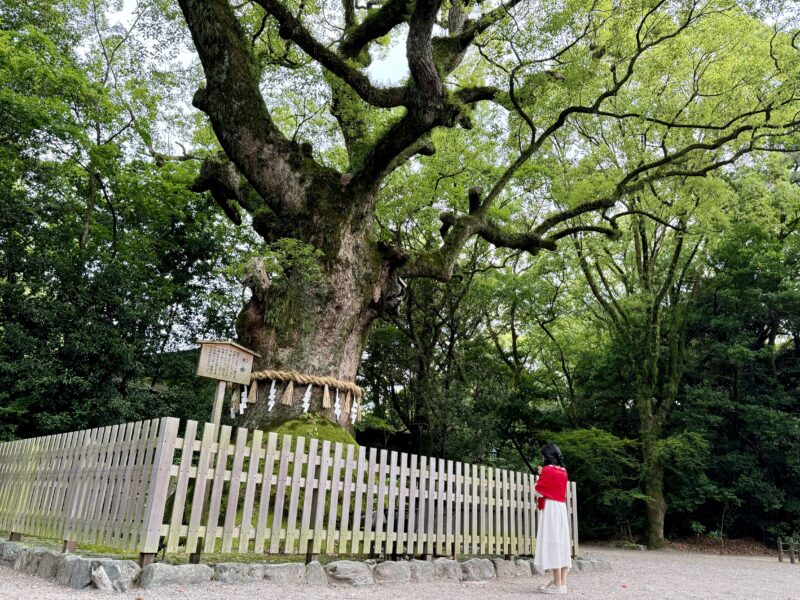
However, one day, while gazing at the Goshinboku (sacred tree) at Atsuta Shrine, I had a sudden epiphany.
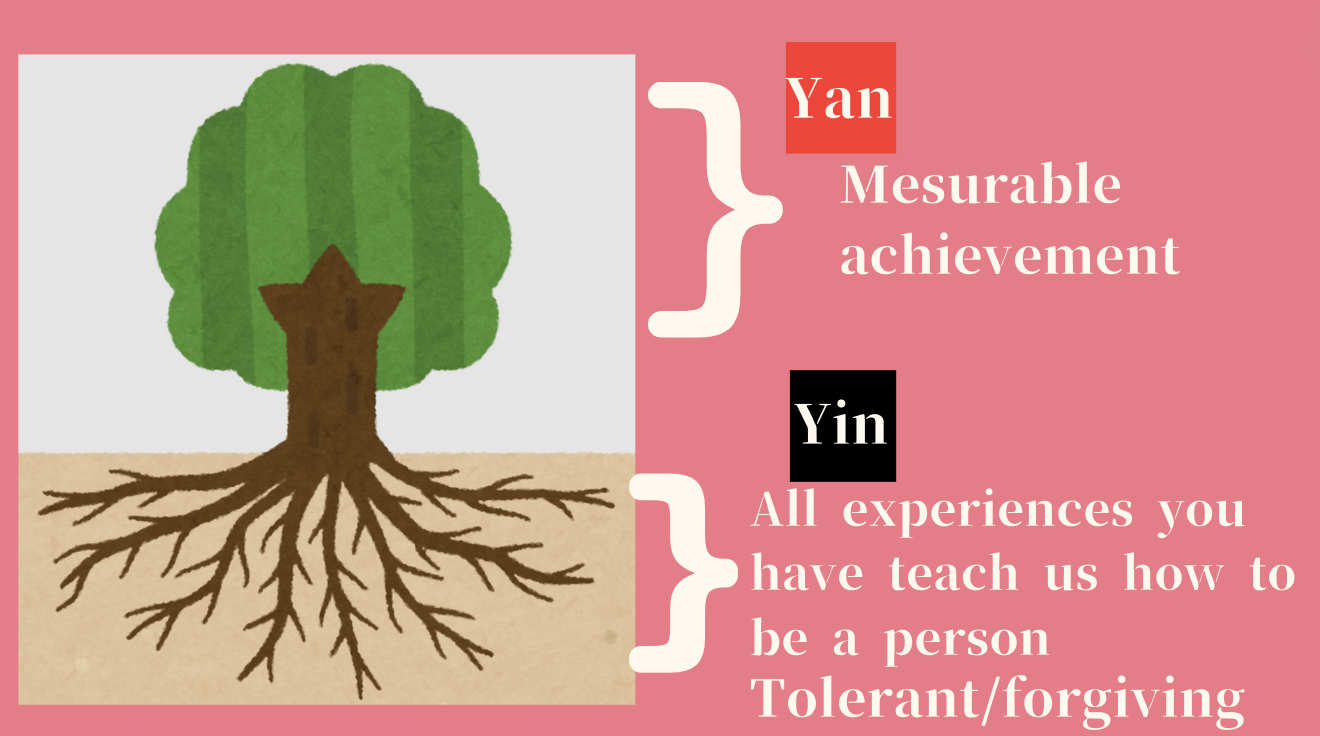
To support the visible, flourishing branches and leaves basking in the light, a tree must have a massive, unshakeable foundation of roots hidden deep in the dark, cold earth. Otherwise, it would simply collapse.
Why do we go through “shadow” experiences?
Perhaps it is our resistance—our denial of them—that causes our suffering. What would happen if I just accepted it all?
There is a saying that Yin and Yang (Shadow and Light) exist in equivalent exchange.
A person who radiates immense light also carries a deep shadow. That meant, since my darkness was so profound, my potential for light must be equally magnificent.
When I started writing these thoughts in my journal, my entire perspective shifted. Once I began to look at the light, I realized that the light only exists because of the shadow.
In that instant, my entire worldview flipped—like all the black discs on an Othello board suddenly turning white.
Your negative experiences and the past you wish to look away from—they all serve as the crucial “roots” that support the tree that is you.
If a divine presence (Kami) resided within you, how would you treat yourself?
You would honor yourself, cherish yourself, and fully permit yourself to exist proudly just as you are.
For the longest time, I believed I was worthless, so I couldn’t treat myself with care.
But feeling something profoundly special about the sacred tree at Atsuta Shrine, I went to see it over and over again. One day, I asked myself: If I treated myself as a sacred tree, would I still think I was worthless?
That was the turning point. For the first time, I truly felt, “I have value simply by existing.”
The tears overflowed and wouldn’t stop.
From this philosophy of “integrating the shadow and the light, and treating oneself as a sacred, revered existence,” my “Sacred Tree Theory” was born.
Here are the 3 specific processes to overcome trauma and rewrite the script of your life.
The 3-Step Process
Step 1: Let Go by Writing (Create a Safe Haven for Your Heart)
First, start by releasing the murky, chaotic emotions accumulated in your heart.
Face your notebook and scribble everything down as if no one will ever read it.
- What to write? Emotions (anger, sadness, anxiety, etc.), trauma, self-criticism, people you cannot forgive. And finally, small moments of gratitude.
It doesn’t have to be pretty. By putting your emotions into words and “visualizing” (externalizing) them, you create a safe, empty space within your heart.
Step 2: Walk to Accept (Move the Body to Move the Mind)
Once you have poured your emotions into the notebook, step outside and walk.
If your body remains still, your thoughts will remain stagnant.
- Why walk? The rhythmic movement of walking stimulates the secretion of serotonin (the happiness hormone) in the brain. By moving your body and sensing the wind and the seasons, your rigid perspective physically begins to expand.
As you walk and objectively observe yourself—thinking, “Wow, I really wrote all that down”—you will feel the turbulent waves of your emotions naturally begin to calm.
Step 3: View from Multiple Angles (Find Meaning and Rewrite)
After you have completely released your emotions and moved your body to reach a neutral state, take one last look at those “past events” from a different angle.
- How? Shift your questions from a victim’s perspective (“Why did this happen to me?”) to an empowered one (“Because I went through that experience, what was I able to gain?”) (Reframing).
By utilizing metacognition (looking at yourself objectively from a bird’s-eye view) and consulting others if necessary, you assign a new “meaning” to your past trauma.
By repeating these three steps, the “script of the tragic heroine” that once bound you to the past will be rewritten into the “script of the true protagonist” who paves their own future.
Triggered by childhood trauma, practiced Dialog Journaling x Walking for 20 years.
Embodied the importance of embracing both positive (Light) and negative (Shadow) experiences
to nurture the sacred tree within, founding the “Sacred Tree Theory.”
Accompanying the Soul Growth of Over 7,030 People
Through my career in counseling and coaching, I have engaged with the hearts of over 7,030 people.
Many of them, just like my past self, harbored unspoken traumas and deep-seated self-denial.
However, those who did not run from their inner “shadow” and carefully nurtured their roots all grew into breathtakingly beautiful and resilient sacred trees.
Trauma is never a curse sent to sabotage your life.
When faced correctly, it transforms into your “greatest power”—the capacity to deeply understand and gently embrace others.
If you are currently paralyzed by the pain of your past:
Why not start by opening a notebook and writing down exactly how you feel right now?
The script of your life can be rewritten starting today, from this very moment.
コメント